- Rage Against the Algorithm
- Posts
- Of Wolf and Man and Newsletters
Of Wolf and Man and Newsletters
Bark at the moon ... books by Mary Cain, Bill Gifford, Wil Haygood, and Anthony DePalma ... a riff on joy or the lack of it ... Pitch Club with Pete Croatto ... and some cool links

Brendan O'Meara
March 03, 2026
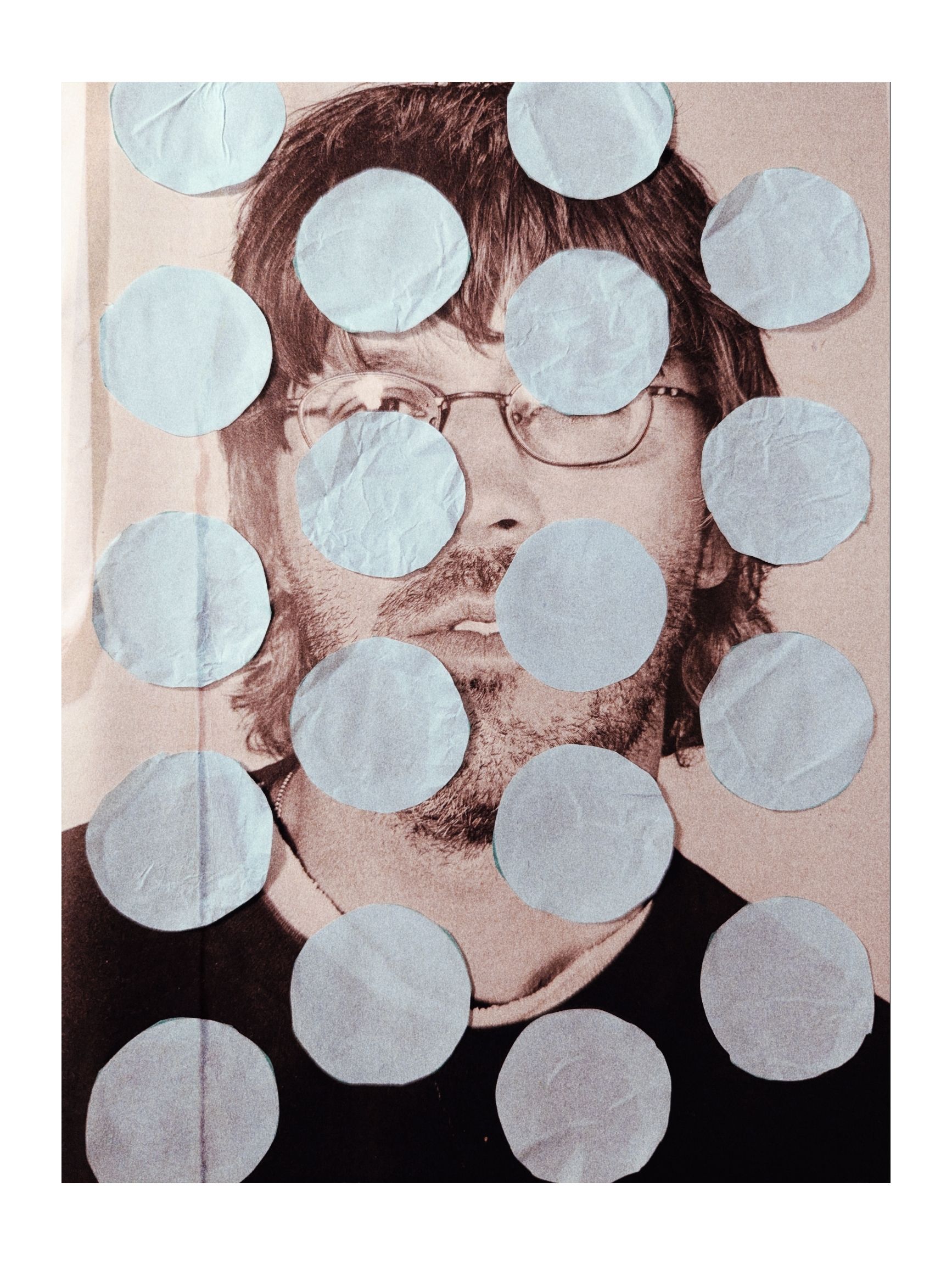
Had a crummy day. Made a cool collage. Was gonna get shitfaced. Made a collage instead. Might get shitfaced later.
Want a promotional discount code to attend the Power of Narrative Conference in Boston? I don’t think I can go, but if I do, I’ll be using this coupon1. Enroll at combeyond.edu and enter the promo code narrative20 to receive 20% off your enrollment!
The Riff
OK-but-listen, friend,
After putting together the March issue of Pitch Club with Pete Croatto I wasn’t feeling putting together the rager for its usual first-of-the-month pub date.
But I’ve long been intrigued by the idea of turning the rager into a … werewolf.
Um, what?
Dude, gimme a sec!
I’ve thought it’d be a quirky-fun-weird thing to publish the newsletter every full moon. That often aligns with the first of the month, but not always. So this issue dropped at 3:38 a.m. PST, a Worm Moon, and also a total lunar eclipse (no bigs). Nothing about the content will change (or will it?). Maybe it’ll have more teeth, maybe a silver bullet will kill it, maybe it’ll be a shape shifter … queue Metallica’s “Of Wolf and Man”:
Shape shift, nose to the wind
Shape shift, feeding I’ve been
Move swift, all senses clean
Earth’s gift
(Back to the meaning) Back to the meaning of … life
Let out a big, ol’ howl! It’s the 62nd day of the year. You’ve got 303 remaining.
So seek the wolf in thyself!
I read a recent newsletter from my pal Kim H. Cross about her experience with performance anxiety, specifically “choking” in sport. She then cited Alysa Liu’s gold-medal performance at the Olympics and the joy she brought to the rink for her figure skating performances. It’s really magical seeing some of the images of her, that unbridled sense of wonder.
Maybe the greatest performance-enhancing drug is … joy.
I bring this up in part because I was a decent baseball player but felt very little joy despite how good I was. The better I got the less fun it was because it was always about trying to get to … the next level.
There’s another reason why I wanted to be good at sports and it was to be accepted by my peers, to be revered and lauded and thought of as cool. It was a perilous search for validation and acceptance. It was about externalities, being able to wear the varsity jersey in school when few others did, it was about status, about affiliation. It was never about joy. Thus, I burned out.
Does this little anecdote of yours have a point, B.O.?
Well, in a way kinda sorta if you’ll bear with me …
When I see other writers I admire online and how they banter with each other, how they can throw around terms like “David Granger’s Esquire” and know what they’re talking about, how they shared their glossy by-lines and/or teach them in feature writing classes, or their interview classes, I have this palpable sense — an almost lizard-brain need — to feel part of that conversation, to eat lunch with the cool kids. Make no fucking mistake … in this world I am very much Eddie Munson from Stranger Things (I’ve long embraced my punk-rock rogue-ishness, but validation is a strong drug).
I’d like to think I’ve matured out of such things, but you can’t unbake a cake, am I right? I have matured to the point where I at least recognize the impulse.
So … am I writing and doing journalism and podcasting for the wrong reasons? Do I only want stories to appear at various outlets so I can flex in the same ways I did as an athlete? On some level, yeah, my insecurities are such that I want to show all those cool kids that I belong, that maybe they’re no better than me after all. But, as anyone who survived middle school and high school knows, the harder you try to be cool the more you look like a loser, a poser trying too hard. And as a 90s kid, being a poser or selling out is kinda sorta the worst thing you can ever do.
It’s why social media is so insidious: It’s pits our basest insecurities against the successes of others. But social media also allows us to lurk … and you can see the parties you weren’t invited to when you thought you were a deserving invitee.
But, it’s all good, man. The cool kids are boring AF.

Issue 10 of Pitch Club with Pete Croatto
Hope you’ll give this a subscribe, because what’s cool is that I added rough transcripts in the footnotes to each audio clip. So if you’re hard of hearing, or merely can’t listen to the audio, you can hover over the footnote and read the text. It’s gives you options.
Great issue with Pete with tremendous freelancey insights.
The Books
This is Not About Running: A Memoir by Mary Cain. The book opens with a riff on Steve Prefontaine, and a critical one at that as it relates to Nike. This book is, as the kids say, fire. “Nike loves Steve Prefontaine because he’s dead.” I wish I wrote that sentence.
Hotwired: How the Hidden Power of Heat Makes Us Stronger by Bill Gifford.
The War Within a War: The Black Struggle in Vietnam and at Home by Wil Haygood. Pair this book with Howard Bryant’s Kings and Pawns. Pod TK.
On This Ground: Hardship and Hope at the Toughest Prep School in America by Anthony DePalma.
The Other Stuff
It’s kinda the same thing dressed in a new clothes, but I love Gabriela Nguyen calling quitting social media “appstinance.”
A sobering look at the time we have and how we might be spending it.
John Steinbeck went through how many pencils in a writing session?
Andre Dubus III gets “primitive.”
As the founder of Pitch Club, this piece caught my eye from Transom.org on pitching as a portal.
A big reason I’m running the Eugene Marathon (news flash) at the end of April is to push myself in ways I haven’t in a long time. So here’s an interview with Kilian Jornet on “what we can learn from pushing our bodies to extremes.”
My Favorite Exchange from the Podcast: Tony Rehagen
Brendan: That afterward of the in Next Wave, the thing I love that you brought up is that like ideas are what separate successful writers from merely talented ones. So I'd love for you to expand on that in the freelance world, just having ideas, generating ideas and executing on them.
Tony: Man, I want to say it was Jason Fagone, formerly of Philadelphia Magazine, author, great writer. He once told me a piece of advice that I think is right: Come to editors with solutions, not with problems. I have a lot of young freelance writers be like, “Hey, hook me up with this editor. Do this and do that.” And I'm like, “I can connect you, but you better have pitches. If you don't come with the idea you're just a problem.” And I think the way Fagone worded it is like, “You're just you're just another name in the inbox.” They're flooded with email all day about people who need things. And if you're like, “Hey, I'm this writer, here are some clips. Hope you have any ideas for me.” That's a problem. That's not a solution. Do your research. Look at what the publication does, find what they might need. Come to editors as a solution, not a problem is always the thing that I lean on there.
Coda
I hope you dug this werewolf issue of RATA. To support what it is I do, you can:
Buy copies of The Front Runner
Subscribe to Pitch Club,
And/or leave kind reviews for the podcast on Apple Podcast and/or leave kind reviews for The Front Runner on Amazon and Goodreads.
My understanding is the book is well received, and well reviewed, though I still refuse to look. Can always use more. As my pal Kim says, buying a book or leaving a review is a vote for the next book; it makes us just a tad more attractive to publishers.
If you have a few bucks burning a hole in your pocket, you may check out Patreon.com/cnfpod.
Otherwise, stay wild, nose to the wind,
b.r.o.
1 Bro, I don’t get kickbacks.